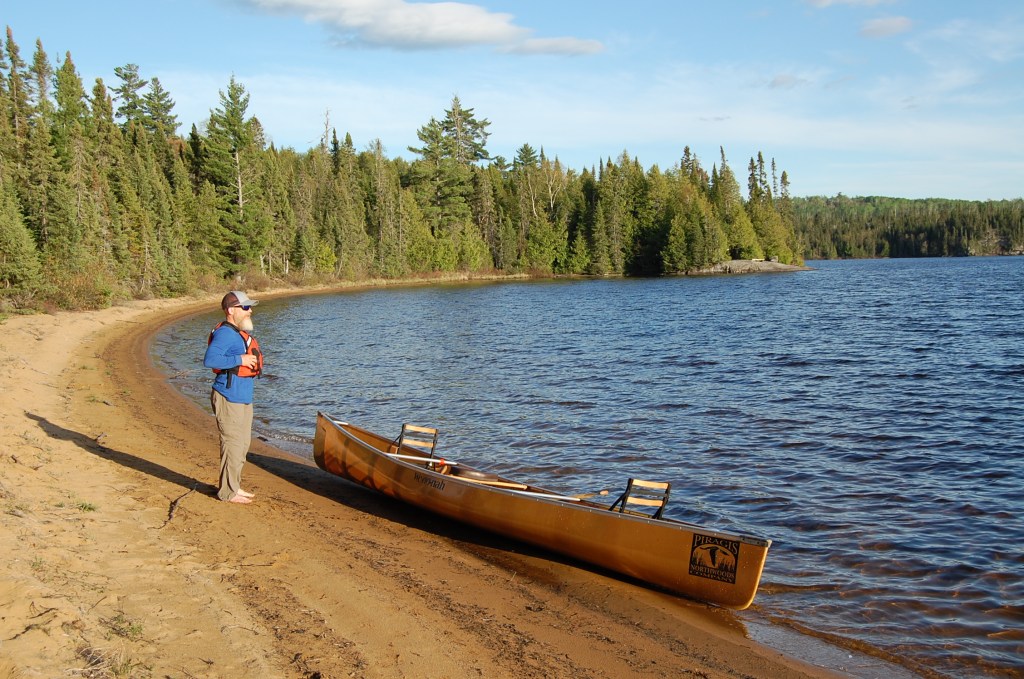
Day 1: Wednesday, May 19, 2021
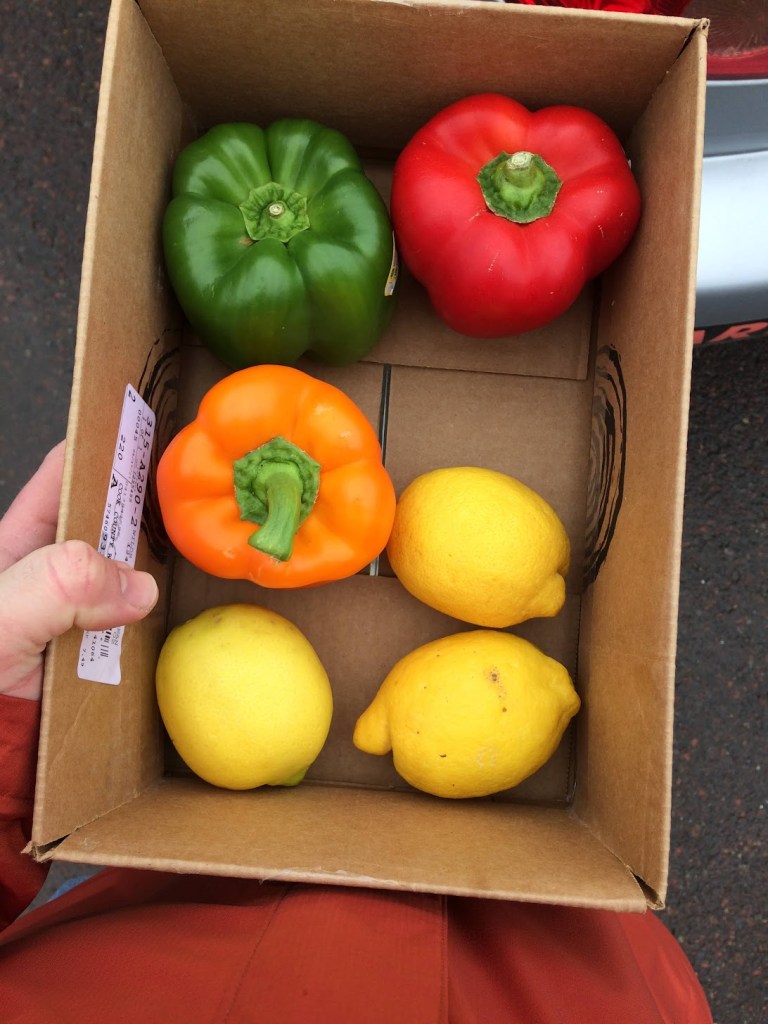
It’s a ghostly morning in Grand Marais. Fog fills the downtown streets and limits visibility to less than a block at times, adding to the unfamiliar excitement that comes with vacationing far from home. My brother and I visit the Lake Superior Trading Post, where the bathroom is off limits to the public because of coronavirus precautions. After Adam buys some bear spray (for friends back home), we drive two blocks to the Cook County Whole Foods Co-Op to pick up peppers of green, red, and orange for burrito night, and three lemons for fish fries. It’s a colorful purchase on a gray day.
We’re only running errands, but it’s good to be with my brother. Living thirteen hours away, we don’t get to see each other often, even less with the pandemic. With no Christmas or summer reunion in 2020, it’s been a year and a half since we were last together.
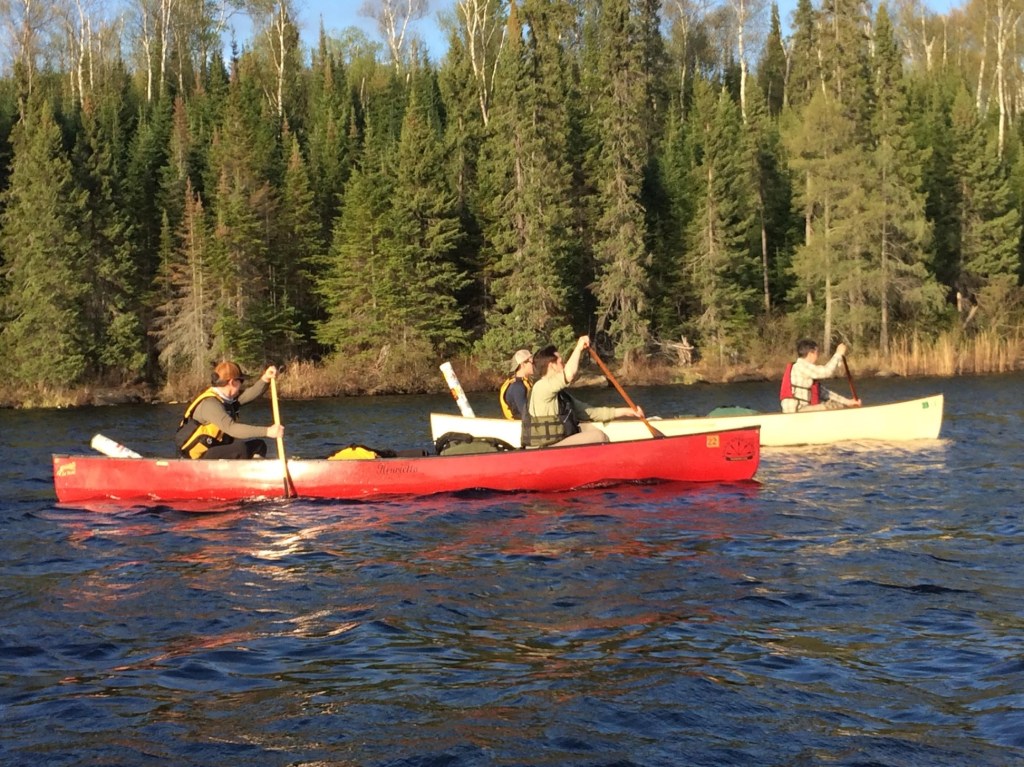
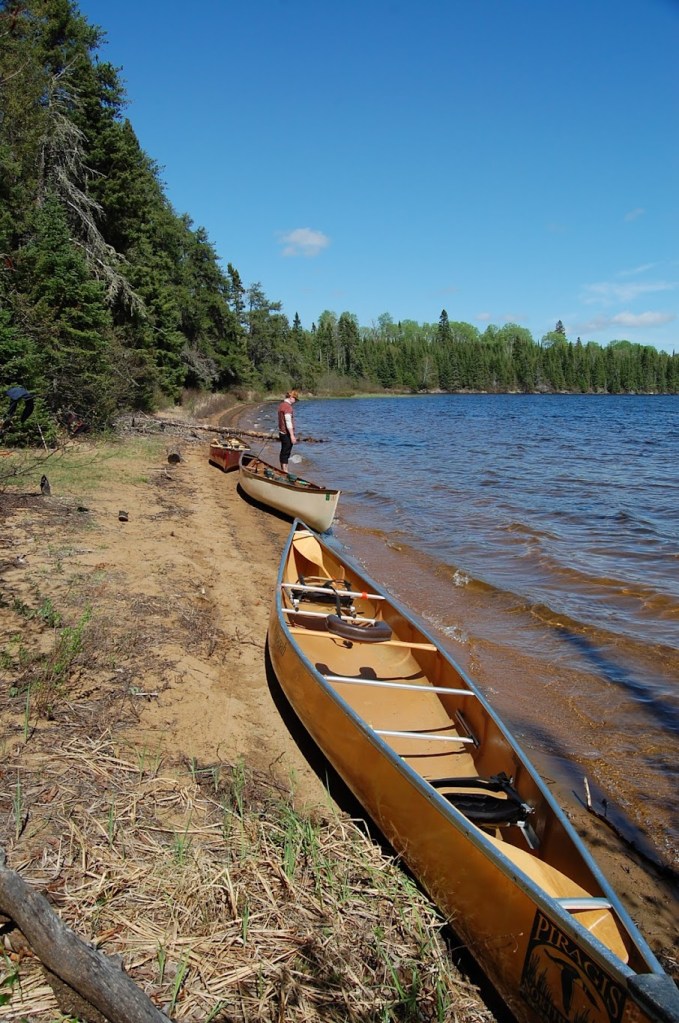
After driving up from the Twin Cities, the other four members of our group arrive, and we reunite in the co-op’s parking lot. Matt and Ben are brothers-in-law, in that their wives are sisters. They also married into the white, thirty-four-year-old Mad River on top of Matt’s car. Zak and Collin will be paddling Zak’s red Souris River (named Henrietta as evidenced by the decal on its side). I will be with my brother in his yellow Wenonah Minnesota II.
Introductions are made and talk gravitates toward work, kids, and all the other coronavirus adaptations we’ve been managing. After a year and a half of quarantines, working from home, and masking up in public, we yearn to be immersed in natural splendor, breathing fresh air, and soaking up sunlight. We are elated to be out of our newly irregular realities and together, back on the verge of familiar canoe camping, ready to find something we’ve been missing.
Perhaps it’s our excitement which leads to us getting separated immediately upon leaving the parking lot. Three cars go east to where the Gunflint Trail meets Highway 61. The third car goes north. It’s only a hiccup, and inconsequential, yet ominous at the same time.
The soupy weather gradually clears as we snake our way up the Gunflint. By the time we make it to Entry Point 50, Cross Bay Lake, it is mostly sunny. A welcoming committee of black flies forces us into head nets and provides a sense of urgency to our final packing.
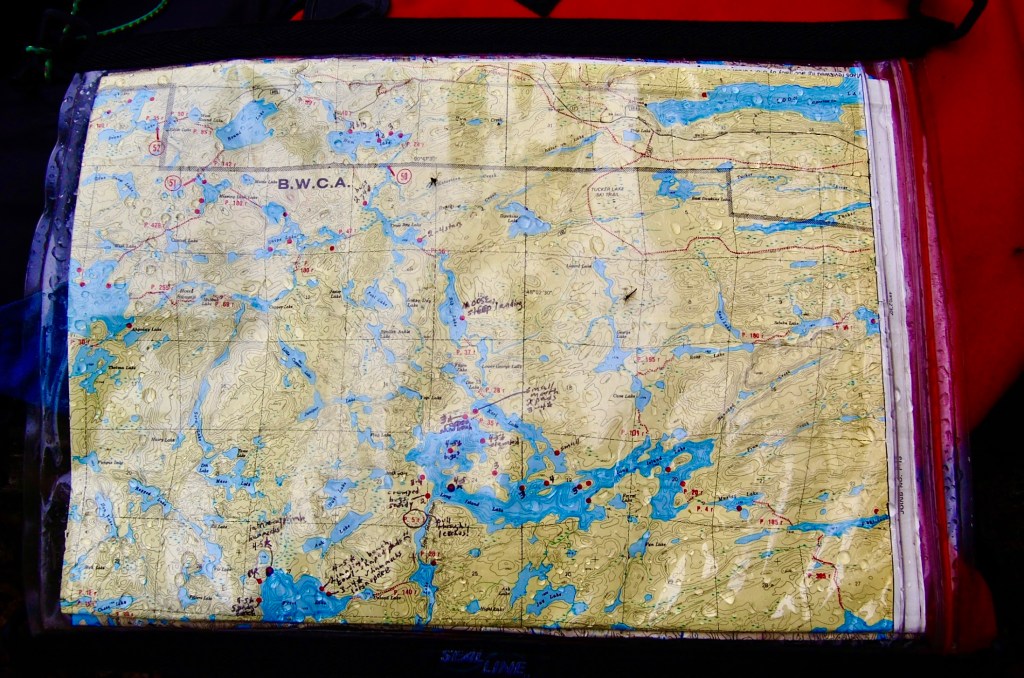
As we carry boats and bags down to the water, we reflect on how many times we’ve made these trips. Zak has done it the most, coming annually since 2000. Matt and I quickly joined him. Collin was a regular back in the early days, but this is his return after a five-year hiatus. It’s number three for Ben. After a concerning maiden trip, he wouldn’t return for many years, but did so last year. For Adam, this is his very first Boundary Waters trip. He’s an outdoorsman of almost every sort, and has canoe experience, but he’s also a husband and father who lives clear on the other side of Michigan’s Upper Peninsula.
Before long, we’re all on the water and all smiles. Is there anything more gratifying than the smooth pull of a paddle to move one forward?
Our ultimate destination is Frost Lake, but we knew given our midday start, we wouldn’t get there on Day One, so we had researched sites on Ham, Cross Bay, and Rib as Night One stopovers.
The paddling is so smooth and easy that we exceed our expectations, flying through Lower George and Karl Lakes, all the way to Long Island Lake with less than an hour of light left.
We leave the Karl portage, passing over the nearby campsite for the next one, on the eastern shore. It is unoccupied and we still have some light, so Adam and I cruise over to check out the next closest site, on the island in the middle of the lake. As we come around the corner, we see a person standing at the shore. We pull up close enough to talk.
“Where you headed?” he asks.
“Well, the plan is to get to Frost tomorrow.”
“Lots of folks headed that way,” he replies.
We paddle back and rejoin the other members of our party, sharing the details of our encounter. The landing is very small and has no room to store canoes, so, one by one, we haul them up a steep, loose rock incline and store them side by side in the cozy camp.
The sun is about to set. In headlamps, we scope out where we are going to sleep and start to set up our tents or hammocks. Room is limited so almost everyone is within throwing distance of the fire grate. Matt is the lone exemption. Apparently, he headed off down the latrine trail and out of sight to find a more secluded spot for his hammock—his characteristic move.
Collin sets up his hammock at the campsite’s point. The scene is simple: silhouetted against a backdrop of water, a human figure with red headlamp, fashions a stretch of fabric between two bare tree trunks. I’m watching a shadow play depiction of a universal truth—in black and white and flashes of red light, a being readies a place to sleep for the night.
In the foreground, Adam and Ben start a fire to heat the smoked brats.
Zak asks no one in particular, “Should I open a box of wine?” “Oh! There’s one already open,” he answers his own question with a smile in his voice.
Homemade Hudson Bay bread and gummies are handed out. The others are audibly impressed when Adam shares that the individually wrapped bars of oats, syrup, cornstarch, and honey include honey from his own hives. “And my doctor sapped the syrup,” he adds.
Brats start to disappear.
“Anybody seen Matt in a while? We better make sure to save some for him.”
It’s been full dark for over ninety minutes with no sign of him since we arrived.
“He’s probably still setting up.”
“Yeah, or maybe he crashed early.”
“Has anybody else been back there yet?”
No one answers.
I eat another brat then announce I am going to find the latrine. I turn on my headlamp and grab the Ziploc with TP and sanitizer in it and head down the dark path.
It’s a long tunnel of trees that curves slightly to the right, opens a little at a stump, and then transitions into a large woody understory as far as the eye can see. After another thirty feet, I find the brown plastic stool twenty feet to my left. I scan the area with my headlamp. No eyes. No sign of Matt, either. I make my way to the seat, carefully pull down my pants and underwear, and slowly sit down.
I am right in the middle of things when I hear what sounds like a distant yell just as I crinkle the Ziploc bag in my hands. I freeze. Did I hear something? Nah. I quickly dismiss it. Then the unmistakable snap of a stick broken underfoot. “That is something big…and close,” I whisper to myself, turning my headlamp off. Smaller sticks break, faster. Crack-crick-crack. It’s getting closer.
“Heeeey!” a voice reaches from the darkness.
I’m silent.
“Leave your light on!”
“Matt?”
“Yeah!”
“Okay! Uh…I’m taking a sh*t!”
“I don’t care! Leave your light on!”
I turn on my headlamp and face the direction of his voice.
Uniform tree trunks with nary a branch, identically straight, staggered and fading into the darkness like columns in a marble labyrinth. His figure slowly emerges, squinting and weary.
“Thank God,” he says, breathing heavily from about twenty yards away. “I’ve been wandering around lost for hours!” He’s still in his paddling clothes—swampy footwear, shorts, a light shirt under a raincoat, and a baseball hat. His face is ashen.
“Oh my god. What happened?”
“I came back here to set up my hammock, walked away for a second, and couldn’t find it again. Couldn’t find anything! All these trees look the same! I didn’t have water or anything…so stupid!”
“Oh my god…So you don’t know where your hammock is?”
“No.”
“Dang. It’s okay. We’ll find it. We’ll get everyone back here with headlamps and do a sweep. Geez, you just been out there breaking sticks this whole time.”
“Yeah! I think I broke about a thousand sticks.”
“Matt? Is that you?” Zak asks as he enters the scene from the latrine trail. “I thought I heard people yelling back here.”
“Yeah, I got lost…until I caught a glimpse of Duster’s light.”
“Oh, man.”
“Um, you guys, I’m glad we’re all okay, but I am still trying to take care of business here. You mind taking it back to camp, please?”
Upon Matt’s return everyone is eager to help. Here, have a brat. Here, try a Hudson Bay bar. Water? Adam and I go down to the shore to fill up Nalgene bottles with a pump filter. After Matt has some food and water in him and a few minutes to process, we all head back with our headlamps to look for his hammock. It isn’t too far from the latrine, and would’ve even been in sight of it, if it hadn’t been on the other side of a thicket. Now, we all know where it is.
We walk back to camp at ease but confess we are very lucky that nothing more serious happened. Matt is understandably frazzled and reticent but over the remainder of the evening he begins to find peace again.
Notes from Day 1: 1) Adam’s Kokatat PFDs are of high quality and fit very well. 2) Adam uses rubberized Nite Ize Gear Ties (twelve inch) to secure paddles in the canoe while portaging. It had been a pet peeve of mine to carry paddles loose on portages.
Day 2: Thursday, May 20
For breakfast, we have hot coffee, Hudson Bay bars, and apples.
Someone asks, “What do we do with the apple cores, just chuck ‘em?”
“No!” someone replies. “Leave no trace!”
“I just eat the whole thing” Zak says.
Ben asks, “Matt, how’d you sleep?”
“Oh, pretty well, until one of the trees I was tied to broke off in the middle of the night.”
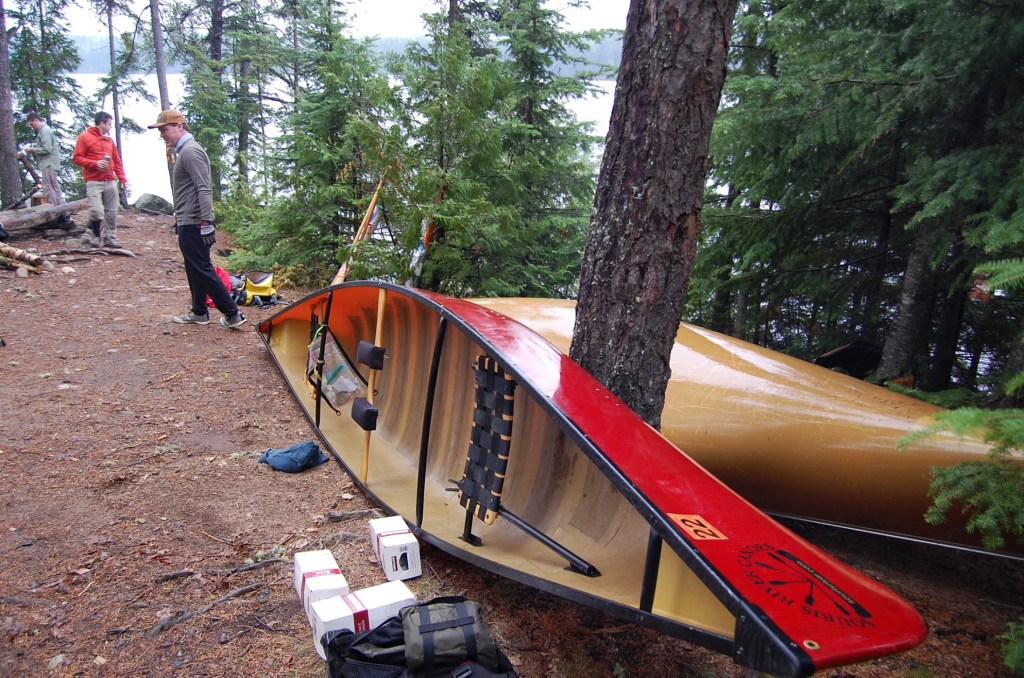
We break camp and paddle south, covering the last three-quarters of Long Island Lake. Visibility is fine but fog is present, creating a nice atmospheric perspective by diffusing the hue of distant trees.
The first boat gets some closeup viewing of an otter where Long Island River empties into the lake we are leaving. We carry over the five-rod portage and continue paddling south on the river but as we do so we are passed by an experienced couple in a tandem canoe. They are unloading at the portage to Gordon Lake when we pull up, so we have time to sit on the water and watch a bald eagle rip apart a fish on the ground where the water from Gordon bumbles over rocks and into Long Island River. The eagle doesn’t like an audience and flies off. As we unload, I scramble over to check out the remains. Shiny scales strewn across damp mosses and grass like a broken beaded necklace.
In our back and forth on the portage, we learn that the couple are retired from teaching in the Minnesota public school system and that the husband has over fifty years of paddling experience. Like us, they are also heading for Frost, now only two short paddles and one portage away.
A quick paddle of the upper quarter of Gordon Lake takes us to the one-hundred-forty rod portage that will almost get us to Frost. Even though we have three canoes filled with gear, we manage to get onto tiny Unload Lake before the couple. As I reach the end of the portage, Zak tells me he saw a moose on the trail. In twenty years of trips, I have never seen a moose.
“You saw a moose?”
“Yeah, well, moose butt.”
I shoot him a quizzical look.
“It was standing on the trail, facing the other way, munching something. By the time I put the canoe down, it had moseyed off into the trees.”
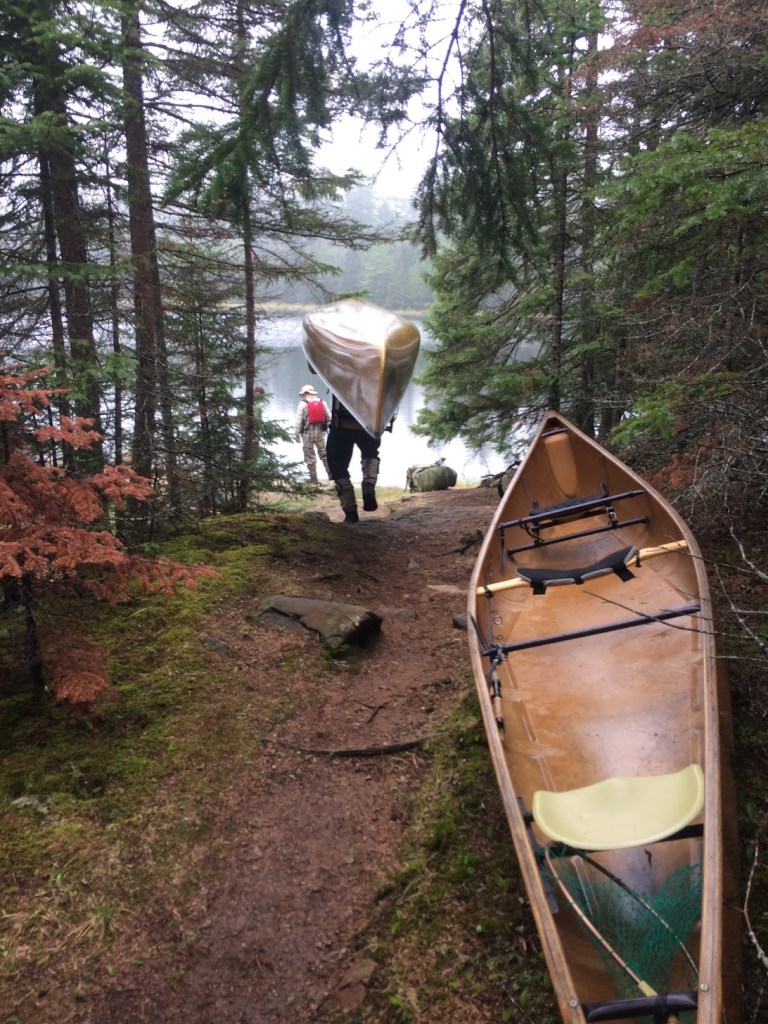
In mere moments we reach the western end of Unload—a beaver dam that keeps the lake roughly five feet higher than Frost. Zak and Collin make it over fine but when Ben gets out of the Mad River, he loses his balance and flops face-first, completely submerging in the mucky brown mess. He quickly emerges and finds his footing. He’s covered in bits and pieces, dripping brown water from head to toe, but smiling.
“Man! Well, that was fun,” he says as he forces water out of his shirt pockets.
Once we are all on Frost, we head for the first campsite, just around the corner to our right. It’s occupied. We continue along the shore to the next site, just a stone’s throw from the first but with access to a large sand beach. A guy there says he let a bunch of people stay with him the previous night and we are welcome to do the same if we need to. We paddle on, heading across the lake, to its northernmost point, a site Zak, Collin, and I (among others) had stayed at for fishing opener thirteen years prior.
Our canoe comes to an easy rest, shushing bow-first onto the sandy beach. We’re home.
Zak and Collin decide to quickly check out the last two sites on the lake, both of which are an easy shoreline paddle south. When they return, they tell us the farther one is just as nice as this one and that while on the water they ran into the couple from the portage. “We told them which one to take. They were very grateful.”
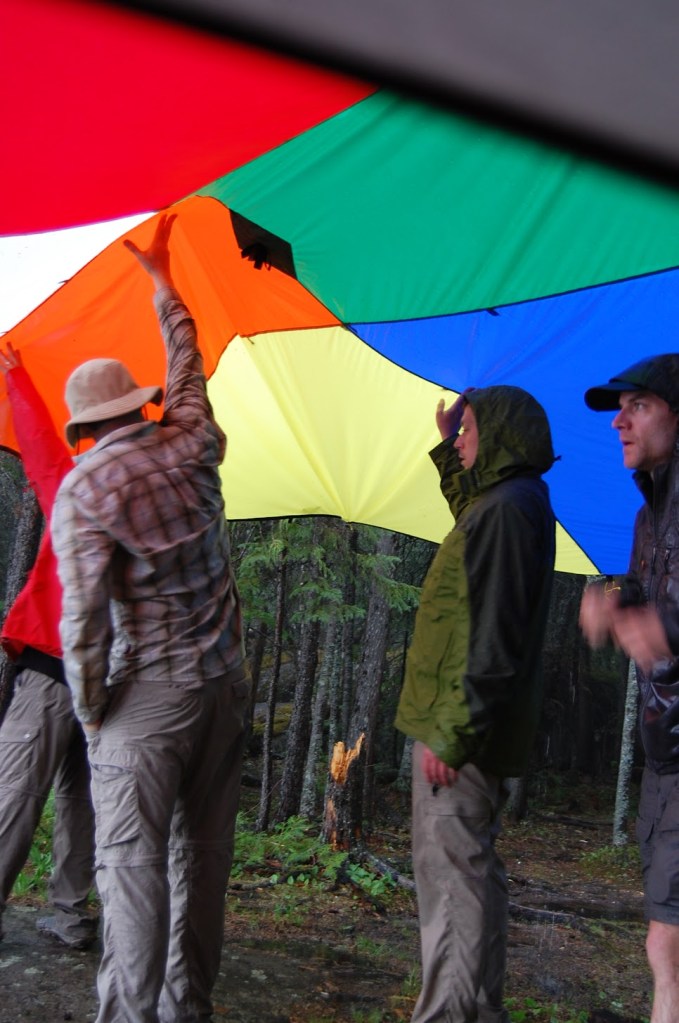
The most distinguishing characteristic of our site is the long narrow sand beach that stretches all the way to the bog that borders the site to the northeast. I definitely remember it from before. The rest of the site seems new to me. There is a break in the trees that leads from the beach to the fire grate and log seating. From the fire area, a path to the left follows the shore but doesn’t lead to much. A path to the right leads to a large clear understory with plenty of spots for tents and hammocks. Off the back of the fire area is space enough for the screen room that hangs from a tarp. Like a barn raising, we all join in tying up the multicolor 12.5 x 12, 1.9-ounce Cooke Custom Sewing Tundra Tarp.
After the rain/bug shelter has been erected, people start to set up sleeping shelters in the understory. Matt sets up the farthest away, again, kind of close to the latrine, but this time well within sight of everyone else. Adam decides to put up the hammock he packed; so, it looks like I’ll have my tent to myself. I have a nagging headache and decide to take a nap.
What seems like an hour later, I wake to Zak addressing camp from the water.
“We caught four fish!”
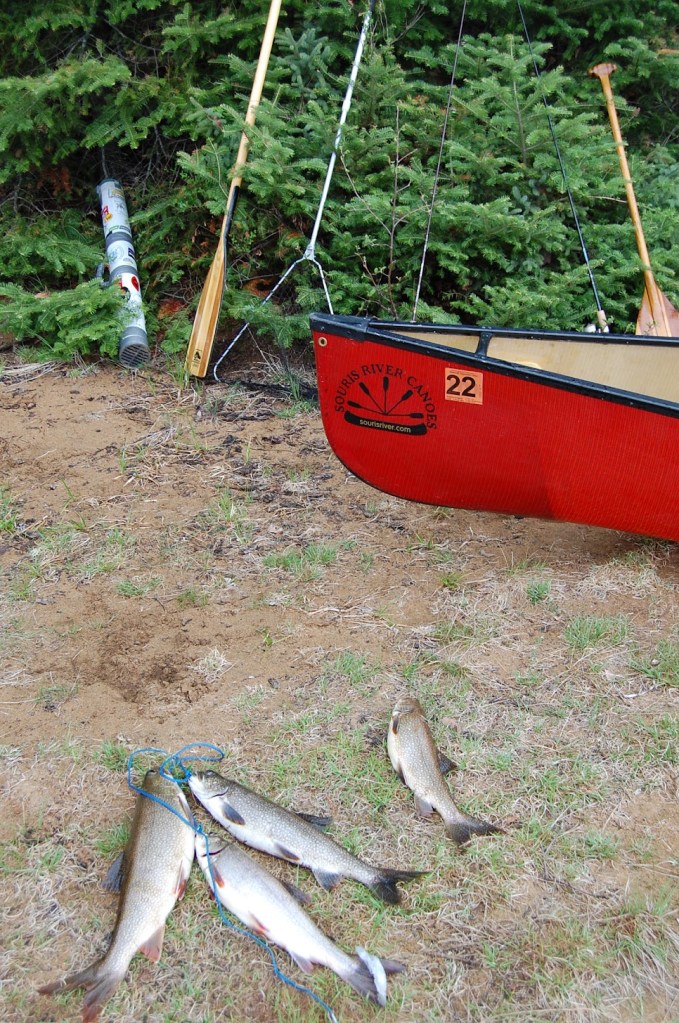
I leave my tent and hit the shore just as they land. They proudly display a stringer of four beautiful lake trout which they quickly clean and prepare for frying. Matt and Collin assist with the stove and other prep work. Ben and I team up on some water filtering. I had recently purchased a Katadyn Hiker Pro Clear Microfilter (as a backup for Matt’s Platypus GravityWorks bag system) and a five-gallon water reservoir with spigot that I am eager to try out. The pump works well but the cube takes a long time to fill, so we switch between pumping and holding the intake away from shore. Over my shoulder, I hear breaded fish sizzle in the BWJ cast aluminum fry pan. Soon, camp is markedly quiet, which can mean only one thing—the others are eating.
“Hey guys…fish is done!” someone manages to yell between bites.
Adam brings a plate over to make sure we get some of the first batch. His eyes shine. He’s enjoying his first lake trout fish fry.
After dinner, we take our drinks to the fire, where we watch two loons slowly make their way past our site, looking for their own meal in the shallow waters just a stone’s throw from shore.
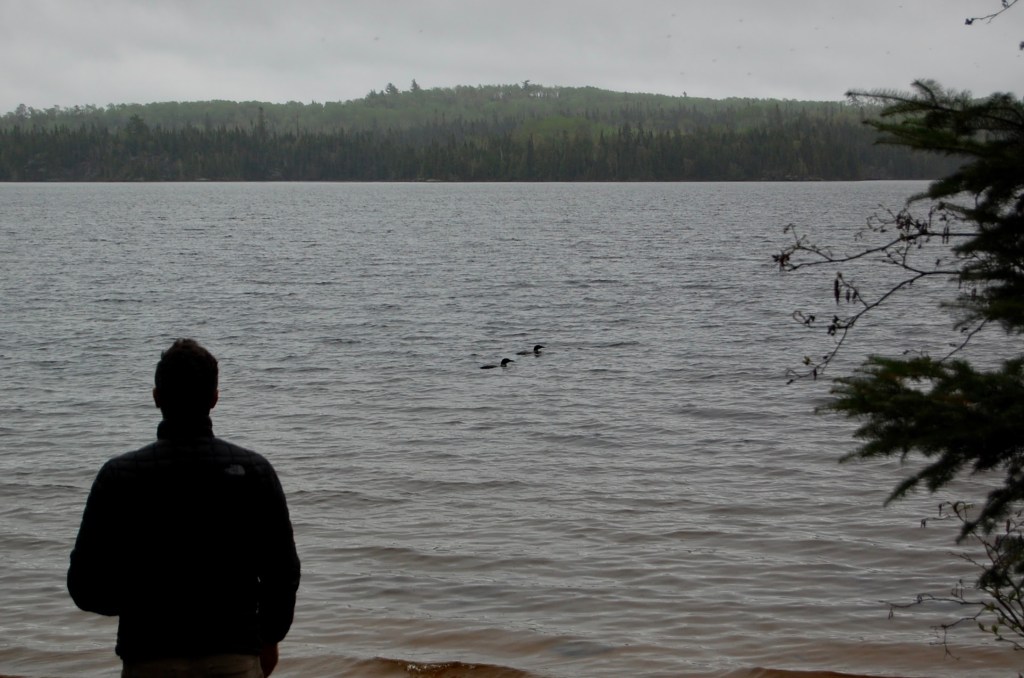
Zak addresses those gathered.
“Yeah, so, Duster and I, and Collin too, have actually stayed at this site before. Duster, you remember? Snow on our tents one morning…”
“Snow on the portage in, too. And wolf scat.”
“Yep. That was the trip where you put a gigantic leech in the clean water jug. Ha! Why did you do that again?”
“I don’t know. I was probably saving the specimen to show everybody else. It was huge! Seven inches long with a line of small red spots down the center. That was also the trip that produced the first picture I ever got published in the BWJ—a shot of the beach stretching off into the distance, with a plastic Fitger’s beer growler in the foreground. The story was about the importance of staying hydrated. Ha ha ha.”
Once night falls, we all take the long walk along the beach. With headlamps, we can easily see the small ones that hide under the surface, in the shallowest of water. Every two feet there’s a different little thing about to dart about: a beetle here, a minnow there, a toad, a crawfish, a leech. The beach ends where the lake transitions to bog. It sounds like there must be 10,000 toads croaking in it. Standing next to each other, we must yell to communicate. After thirty seconds, the droning drills into our brains and we must recuse ourselves, lest we fall under their spell and walk into the bog never to be seen again.
Notes from Day 2: 1) The water cube rests atop a stump near the screen room and becomes a significant light disseminator when a light source is left on it; 2) A light source introduced on the trip is the LuminAID solar lantern—a small inflatable cube (with a solar-charging panel top) which casts light in your choice of eight colors (including a multicolor fade).
Day 3: Friday, May 21
It’s just a beautiful day. The sun is out. Cotton ball clouds slide across a blue sky. Zak casts from the beach and brings in a juvenile Northern pike. He’s able to get the hook out without the fish ever leaving water. We watch its dark form wave away against the tan sand and out of sight.

Collin gets to work on sawing and splitting wood at the head of the understory trail. Zak enjoys telling us the brand and model of his new saw—the Silky BIGBOY 2000. It is pretty smooth.
Adam and I are under the sunlit tarp (rectangles of brilliant red, orange, yellow, green, blue, and white) inside the screen room, cleaning up what’s left of the salami, cheese, and cracker plate, and taking it easy in some Helinox Sunset chairs. We look out at the shining lake for long stretches and make occasional forays into the bear barrel for snacks. The raspberry yogurt covered pretzels were delicious and popular. I managed to taste one before they were gone. Other goodies include dark chocolate covered ginger, curry cashews, and possibly the best bear barrel item—Snickers Fun Size. As we snack, our gaze keeps getting drawn back to the shimmering lake before us.
We go to it.
Adam and Matt strike up a conversation on the shore. Adam spots a toad in the sandy grass. Matt goes out and brings back a trout. Half the guys go for a dip. The water is unseasonably warm, the bottom is sand, and, sixty feet out, it’s still only four feet deep. Some of the safest swimming conditions I’ve ever seen.
The sun moves on and shadows grow. With a couple hours of light left, we all head out onto the water, where the remaining rays can reach us. People have lines out, but nobody is taking the bait. Mostly, we are all just paddling around the giant rock in the middle of the lake. Collin somehow gets snagged on the boulder which is roughly eighteen feet wide and twelve feet above the water. I document the hilarity with a picture. The trees on the opposing shore take on the golden hue of the sun’s goodbye and we slowly paddle back to camp.

After another supper of fish, someone starts a fire. Soon it is dark. We warm our throats with pulls from a silver flask of Scotch. A loon wails. “Ah, the water wolf.”
Gradually, we focus on the celestial panorama above us. As seen from shore, the Big Dipper is perfectly lined up with our fire. Collin tries to mess with me, claiming that what we are looking at is not the Big Dipper. I know him too well to fall for his feigned ignorance.
“I know that it’s the Big Dipper,” he quietly concedes to me a few minutes later.
“What gets me about the Big Dipper,” I say, “is that it’s seven stars and if you connect the dots, you have the shape of a seven. I wonder if that’s where the symbol for seven came from.”
“Nah, it’s not a seven. It’s a question mark.” Collin says.
Notes from Day 3: A few days after we returned from our trip, a stranger posted a video on the Facebook page BWCA Group of a SpaceX Starlink satellite train moving across the sky on this very night. Had we stayed up a little later, we may have witnessed a string of sixty low-orbit lights silently pass overhead in single file.
Day 4: Saturday, May 22
There’s always a slight sadness when leaving a campsite, even if it means there’s another one at the end of the day. Oh well, we returned to Frost once, perhaps we would again.
I do a final micro-trash sweep of the site, walk into the water, and sit down in the stern seat of Adam’s canoe (with easy access to his DSLR camera in a slick Seal Line thwart bag). We paddle away, out to the big boulder and past it. This time, everyone clears the beaver dam cleanly.
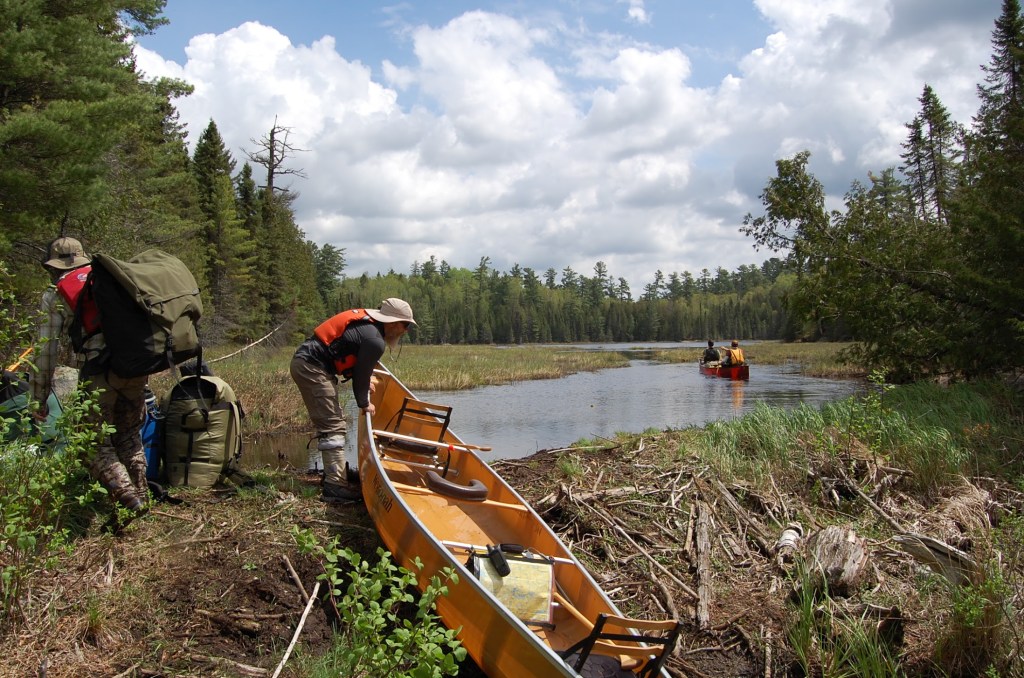
It’s another perfect paddling day. Sunny but slightly overcast. Whatever light sweat we break on portages is quickly carried away by the gentle breeze. After three days, we are conditioned and have our rhythms down, so we make easy work of the route.
When we get to Rib, the skies darken a bit. Halfway across the lake an image starts to come into focus. Waiting for us on the far shore is a giant rock that looks like the face of a grimacing ogre. Its big, bulbous nose hangs over its upper lip. Its brow furled and eyes asquint. By the time we reach its shore, the face’s definition has abstracted back to mere stone and all imagined threat has dissipated.
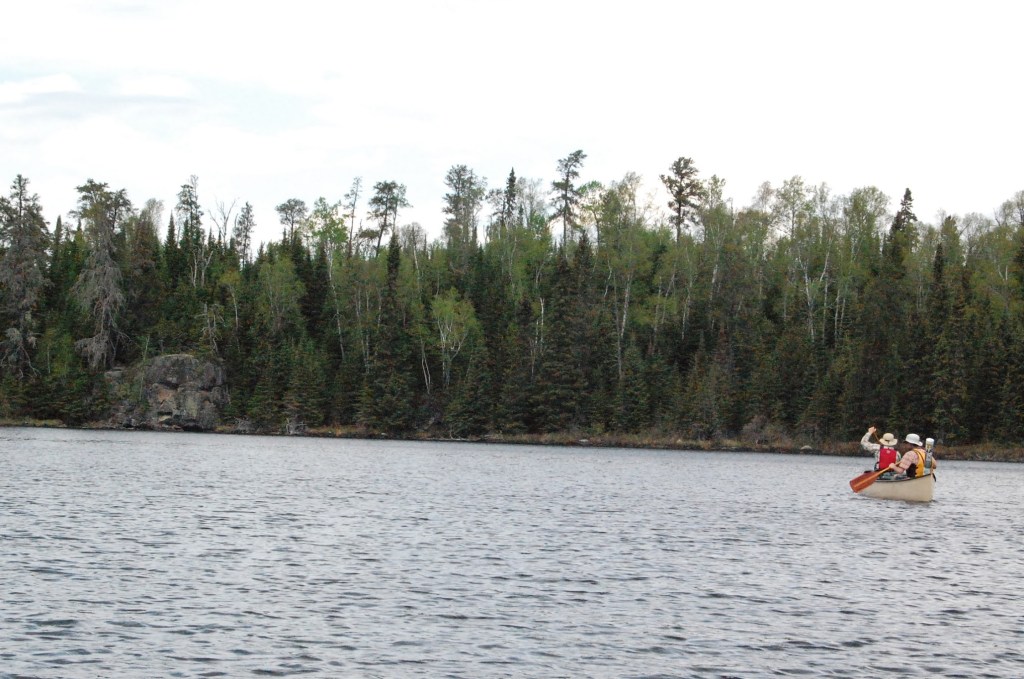
Before long, we’re on Cross Bay Lake, the last lake before crossing the BWCAW border. Perhaps I am subconsciously stymying our progress when I lose my paddle overboard while snapping pictures. Matt and Ben are nice enough to turn around and retrieve it for me. We cross the center of the long, narrow lake, where the namesake “cross” is evident by thin boggy bays stretching away to the left and the right.
We land at the lake’s northern site for a bathroom and water break. The landing is barely there and, like our first night in, the site is very elevated, reached only by a steep scramble. But once we’re up there, it’s very pleasant. There is a lovely view and we can see the cross waters from the fire area. It doesn’t have a ton of room but would do nicely in a pinch.
Less than an hour later we’ve passed the official boundary and pull up to our final campsite. It’s the second of four along the northern shore if you’re travelling east to west on Ham Lake. It’s around mid-afternoon and we didn’t have lunch, so we start refueling, polishing off loose bags of granola, beef jerky, and anything else that’s floated to the top of the bear barrel.
The site is thin and mostly comprised of one solid rock outcrop that gradually slopes to the water. The “patio” along the lake has no tree cover but it does have one distinguishing feature, a birthmark of sorts—a filled-in infinity sign of grass lies atop the flat stone like an area rug. Each teardrop-shaped spot is big enough for a tent. Ben pitches his on one of them. Zak hangs his hammock twenty feet away, at the end of the patio, almost within reach of the water. I choose to set up my tent in a “room” just off the patio, close to Ben’s spot. It is a good-sized space with tree walls on three sides and a small patch of bare soil upon which tiny blue moths flutter about. Collin sets up his hammock behind the tree wall. Adam does his on the far side of the fire area, which extends back into camp, providing a slightly more sheltered group area. Matt takes his hammock past the patio area, into the shoreline trees, and finds a spot out of sight but still well within earshot.
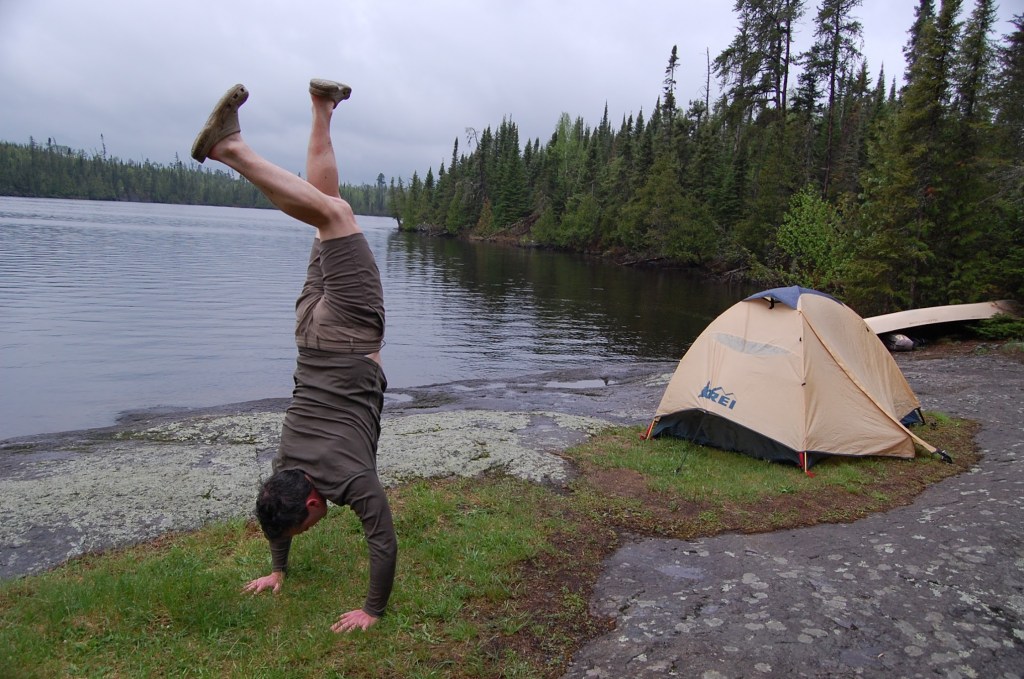
Adam and Ben take a chair to the water’s edge and get to work pumping water into the cube. Collin and I monitor the situation while Zak and Matt, the diehard fishermen of the group, decide to hop in a canoe and paddle around the corner to test their skill at the waterfall that can be heard but is out of view (possibly the outlet of Ham Creek).
Maybe twenty minutes later, the skies have noticeably darkened and one or two lone raindrops spark those of us at camp to sweep the site, placing loose items under hammock rainflies in case it really starts to shower. Just as we finish, the downpour reaches camp. Four of us are shoulder-to-shoulder, in camp chairs under Adam’s hammock rainfly. A steady stream runs off the corners. We have a clear view of the now hazy lake, its surface suddenly turbulent with splashing rain. Matt and Zak slowly pull up to the landing, hooded and expressionless.
“Did you catch anything?” someone cheerily asks from under the small tarp.
There’s no answer as they bring the canoe up on land.
Zak walks over. From our vantage under the tarp, only his wet legs are visible.
“Well, should we get the big tarp up?” he asks.
The group leaves the dry confines of the hammock fly and proceeds to tie up the multicolor tarp in the adjacent group space.
The rain passes and Collin, Adam, and Ben set to starting a fire. Everything is wet and it just kind of smolders. Any smoke it produces hangs lowly around camp.
We decide to make burritos for supper. Matt washes and slices up the colored peppers and an onion, placing them in the fish fry pan with a little oil. In the meantime, he slices some cheese. Collin starts a pot of water to boil for the rice and beans. I place a foil packet of tortillas on the fire grate to warm. Someone finds the Ziploc bag of hot sauce packets. There is an interesting parallel between the square multicolor tarp above us and the square pan of multicolor peppers below us.
With full bellies, it’s time to squeeze the last of the wine from the bag. Having paddled almost our entire route in one day, and without a healthy fire to draw our focus, we turn in shortly after dark.
Notes from Day 4: There is a large ant colony around the base of a pine tree in the middle of the site. The observable area is about seven feet in diameter.
Day 5: Sunday, May 23
It’s the day we say goodbye to the BW and to each other. Mood around camp is subdued. Most sip coffee and drink in the surroundings that will soon be a foggy memory.
It is one hundred percent overcast. The sky is a single, unblemished tone of light gray. The lake is quiet, its surface showing only the slightest undulation. Yet, something special is happening out there. The unseen waterfall can barely be heard but its impact is seen in a misty parade of puffs that slide across the lake. Each one forty feet tall, they make their way north in a single file line that has no beginning or end. On the other side of the misty veil, the silhouette of a solo paddler works its way in the opposing direction. Their excursion is just beginning.
Matt joins me on shore.
“Good morning! Pretty neat, huh?” he says while watching the spectral procession.
“Yeah. I see it as a parade of paddlers from the past…spirits slowly making their way out. Showing us the way. Our future taking shape.”
Before long, we join the ghostly mists and are paddling among them, adding our individual splashes of orange, red, and yellow to the pale palette of the morning.
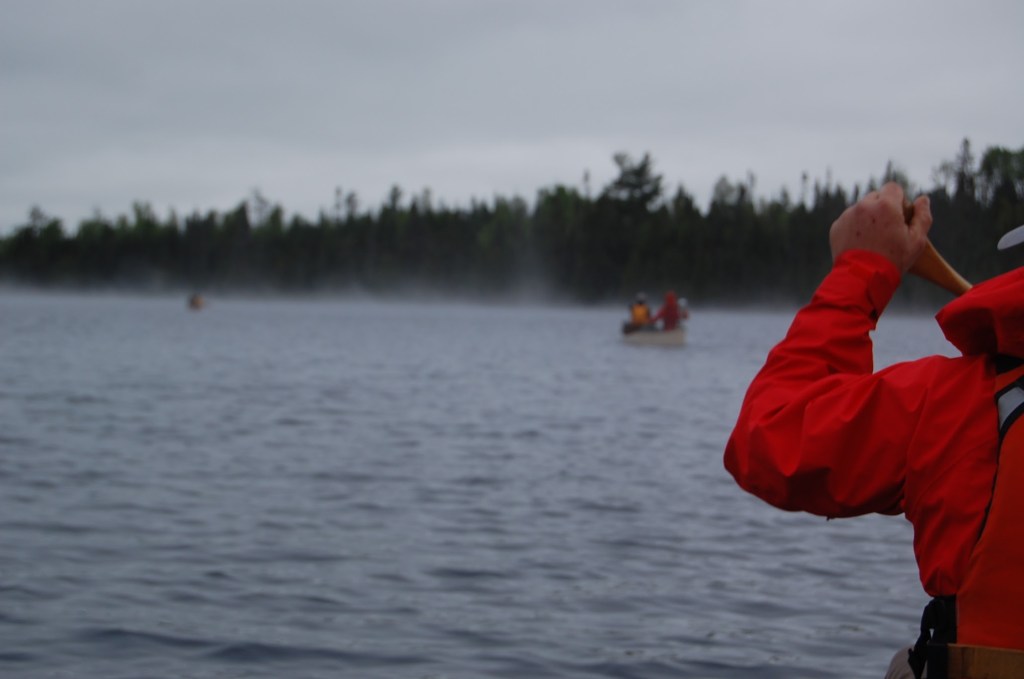
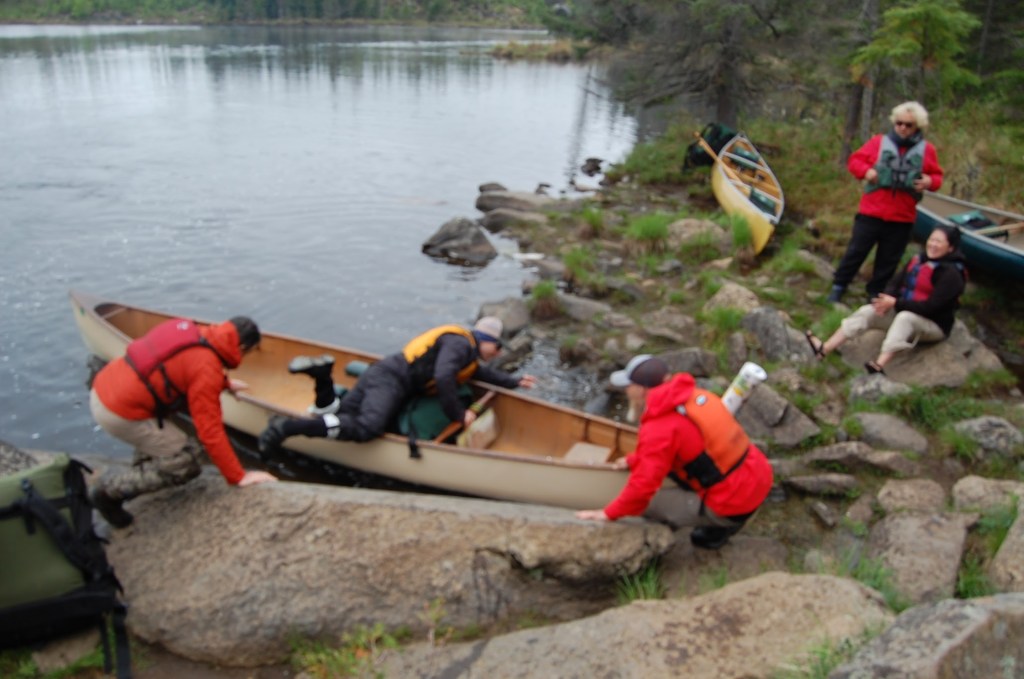
We portage out of Ham Lake and its mystical atmosphere, crossing paths with a young man and woman heading the other way. At the end of the portage, off to the side, we find the rest of their party, a man and woman resting on the rocks, waiting for their friends to return. We make small talk while watching Matt load the Mad River. As he sets a pack into the floating canoe, he slips, loses his balance, and gracefully falls onto the loaded bag. Ben and Adam stabilize the canoe while Matt laughs. Realizing he has escaped possible injury, and a bath, he is all smiles looking like a turtle precariously balanced on a small log. The lady finds great enjoyment in his falling with finesse.
“Oh!” she exclaims while clapping and laughing. “Bravo!”
Under clearing skies, we paddle away toward our final portage. On it, we pass between a pair of twenty-foot remnants—bare, narrow trunks on either side of the trail which look like a marathon’s finish line (minus the banner)—as we near our final body of water.
A few minutes later we reach the parking lot landing. We pack our vehicles, tie up canoes, and drive to our final stop as a group—the Trail Center. It’s a tradition we lost last year since they were closed because of the state’s pandemic guidelines.
On the outside it looks like the same old place, but inside, the restaurant’s coronavirus adaptations are impressive. They have a central table for self-distribution of condiments, napkins, sanitizer, and laminated menus. Clear shower curtains have been hung to compartmentalize tables. A counter-length one runs atop the bar. A twenty-foot length walls off our long table in the corner window. We wear masks. All the staff wear masks. Even the taxidermy bear climbing the post in the middle of the room is wearing a mask.
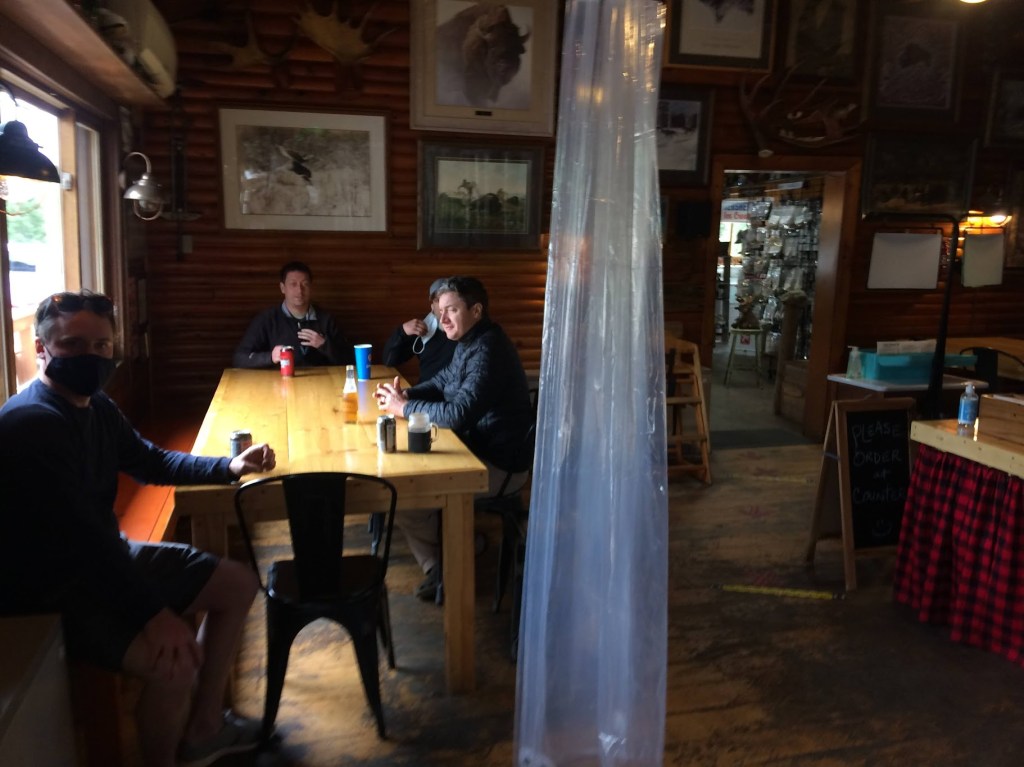
While enjoying frosty beers, we take some selfies to document our final moments together.
“Well, here we are. We did it!”
“Yeah, and we even managed to avert a disaster…on my part,” Matt adds.
“You may have been lost, but the important thing is that you found your way back.”
I lean back, look around the table, and do some reflecting. Collin and Ben found their way back to the group too, after extended absences. Adam found a new outdoor experience and I found a new way to reconnect with my brother. I look over at Zak. He found the bottom of his double-patty burger basket.
For the time being, the “real world” seems to have lost its semblance of normalcy, but in the Boundary Waters, the familiar waits for us to re-find it. The satisfaction gained from moving under our own power, the peace found amid natural splendor, the way our bodies wake up from trekking varied terrain—these are aspects of life we have evolved with for millennia; yet, these same aspects get pushed to the margins (the boundaries) of modern society. Now, we must go out of our way to find them. In the Boundary Waters we lose the manufactured stress and anxiety of modern society. What we find are truer versions of ourselves.
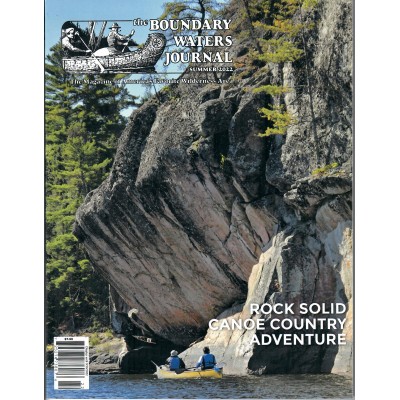
GET THE MAGAZINE FOR $6.95 HERE—> https://www.boundarywatersjournal.com/shop/available-back-issues/product/205-summer-2022
 Sustainer